

Connecting PayPal to Grigora Commerce allows your store to accept online payments through PayPal during checkout. Before connecting the gateway, make sure you have an active PayPal account and access to the required API credentials. PayPal provides separate Sandbox and Live environments, so use the credentials that correspond to the environment you want to configure.
Open Payment Settings
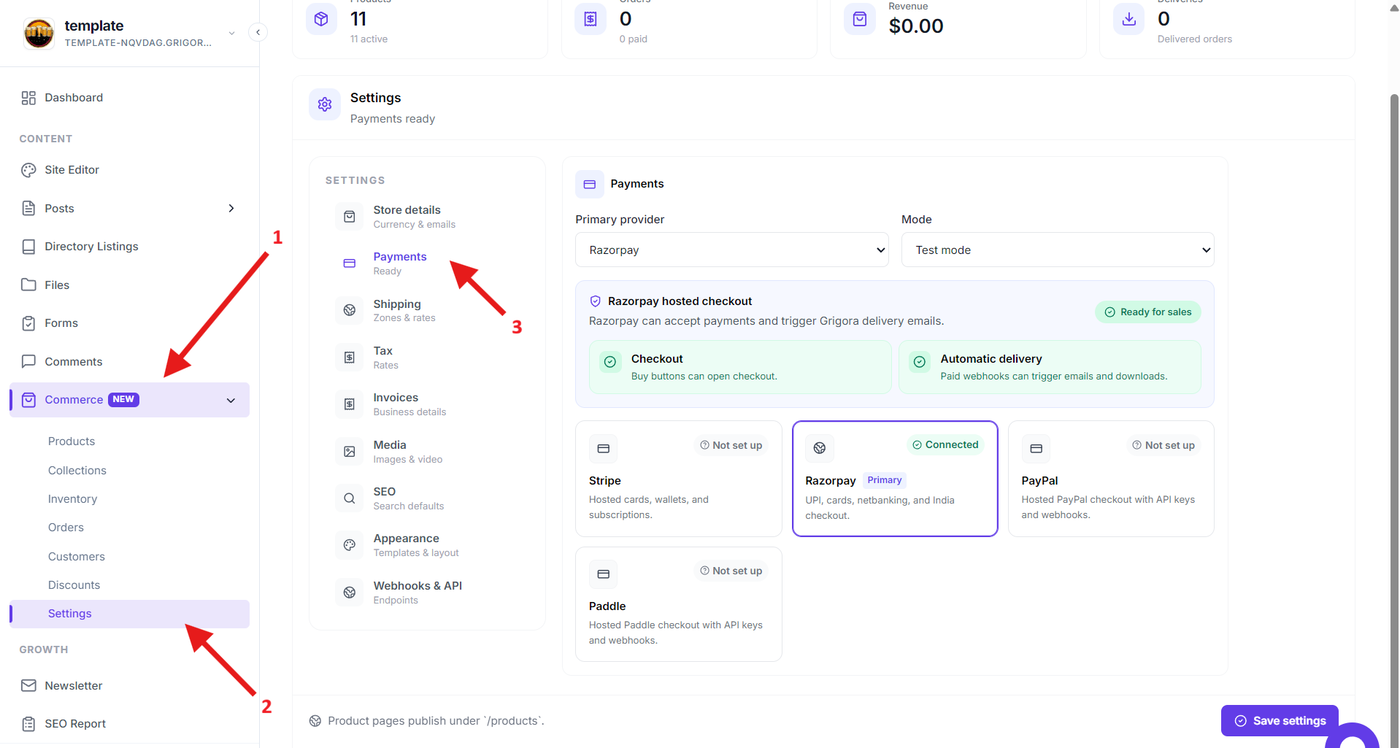
Step 1: Open the payment setup
From the Grigora dashboard, expand Commerce and open the payment setup option. You can also use the Set up payments option shown in the payment gateway setup notification when payments have not yet been configured.
The payment setup screen allows you to connect a supported checkout provider for your store.
Select PayPal
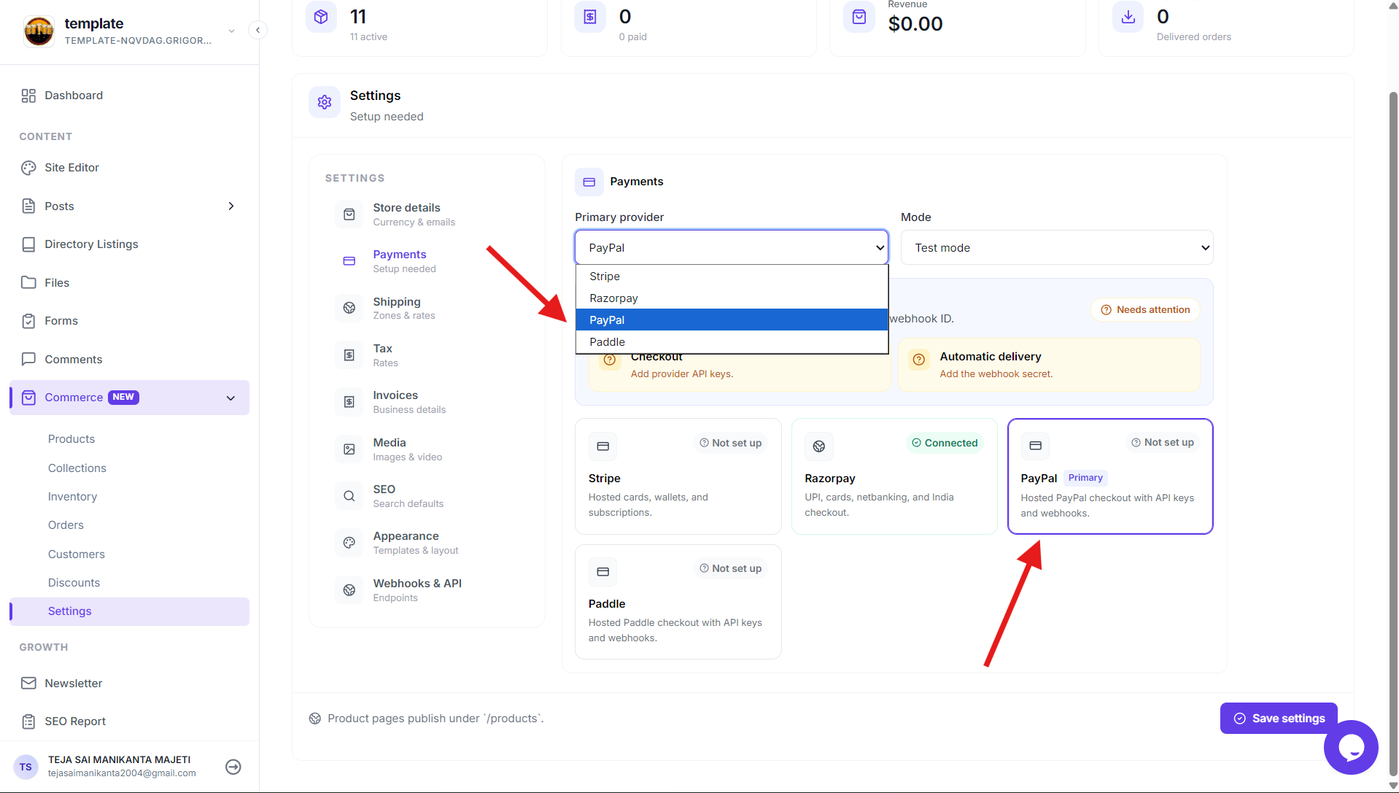
Step 2: Select PayPal as the payment provider
From the available payment providers, select PayPal.
PayPal will be used as the payment gateway for processing customer payments made through your store's checkout.
Get PayPal API Credentials
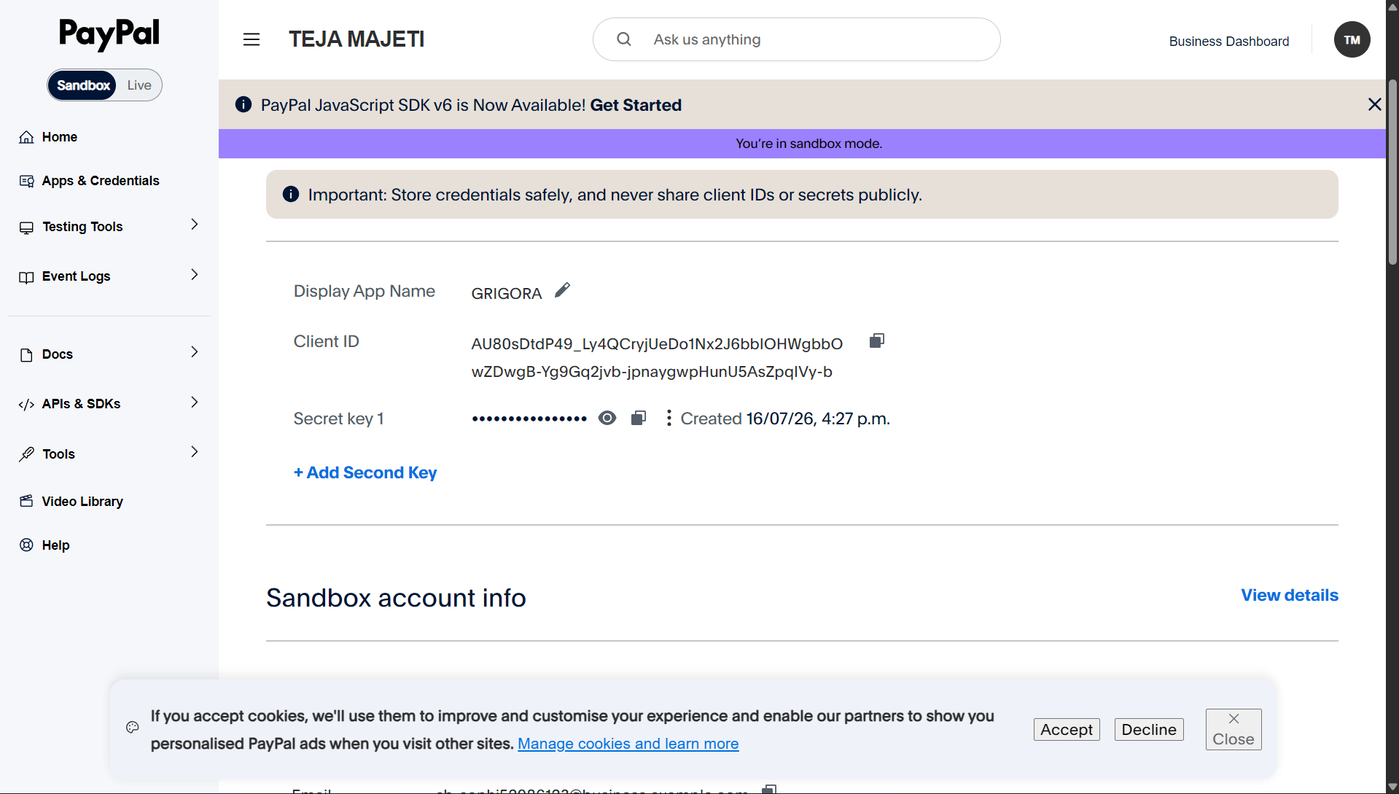
Step 3: Generate or retrieve your PayPal API credentials
Log in to the PayPal Developer Dashboard and open Apps & Credentials. Create or select the REST API app you want to use for your Grigora Commerce integration.
Copy the Client ID and Client Secret for the app. PayPal provides separate credentials for Sandbox and Live environments, so make sure you are using the credentials for the mode you want to configure.
For this documentation, use Sandbox credentials to demonstrate the setup and verify the payment flow safely without processing real payments. When your store is ready to accept real payments, switch to the Live mode and use your live PayPal API credentials.
Keep your API credentials secure. Never expose your Client Secret in publicly accessible code, documentation, screenshots, or client-side applications.
Add PayPal Credentials to Grigora
Step 4: Enter the PayPal credentials and configure the webhook
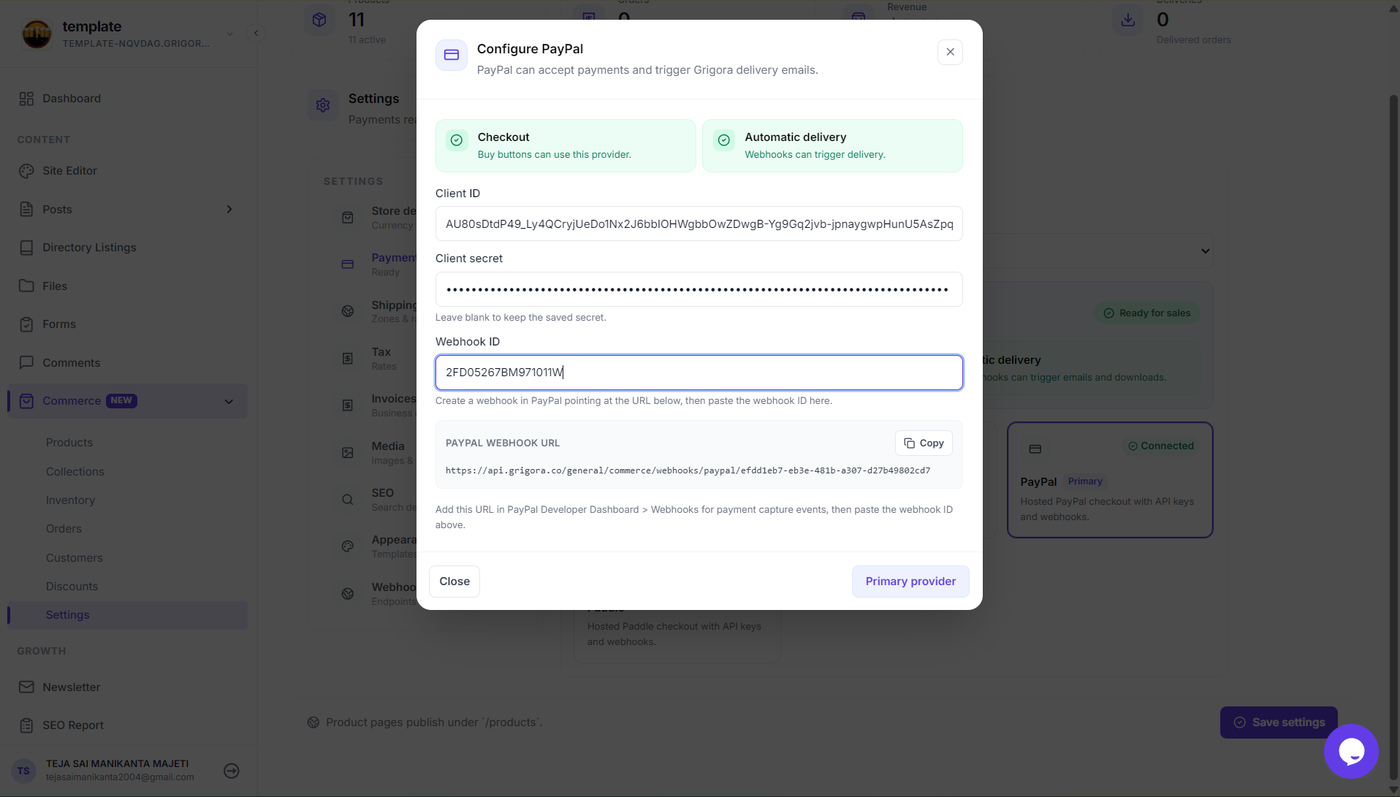
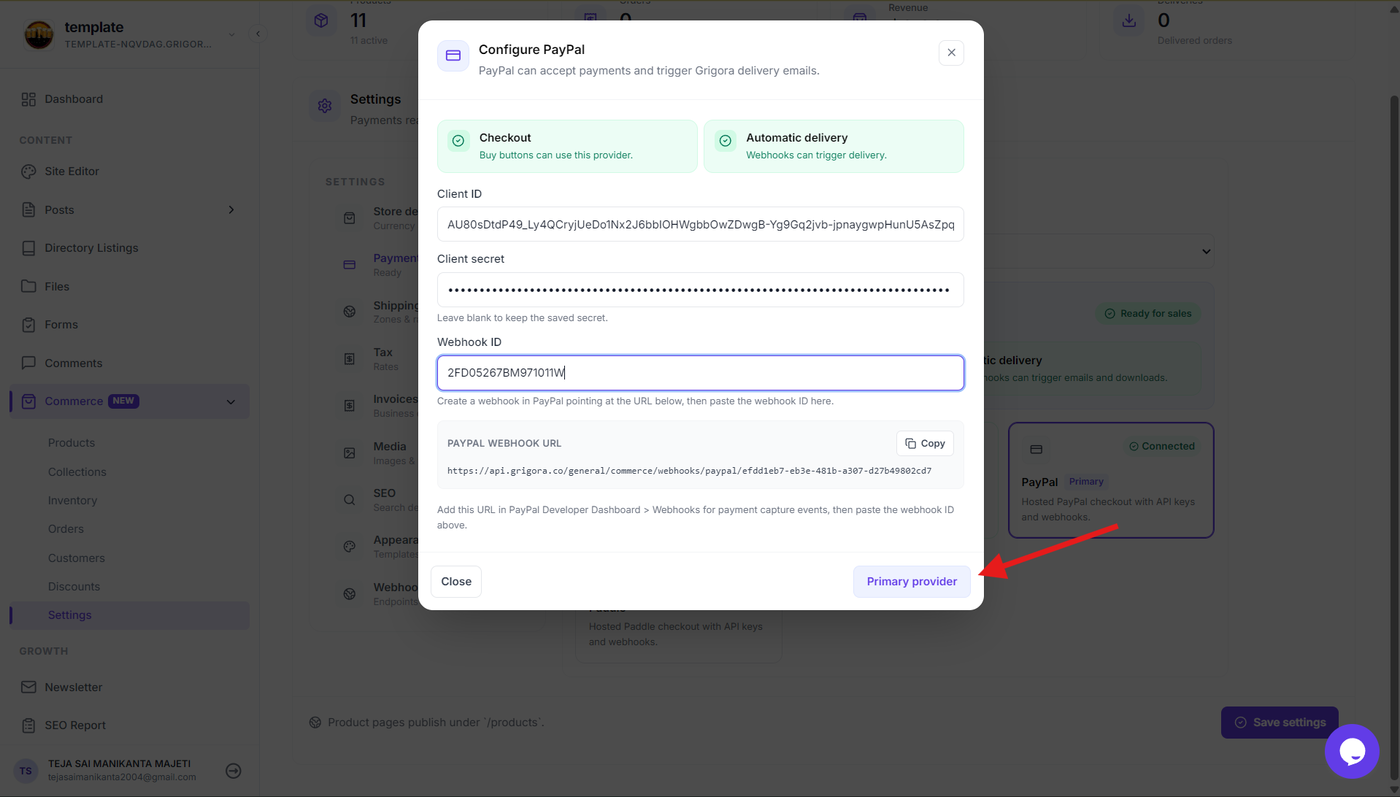
Return to Grigora and click PayPal from the available payment gateway options. A configuration modal will open with fields for Client ID, Client Secret, and Webhook Secret.
Enter your PayPal Client ID and Client Secret in the corresponding fields.
In the same modal, locate the PayPal Webhook URL displayed below the credential fields and click Copy to copy it.
Open your PayPal Developer Dashboard and go to your REST API app's webhook configuration.
Create a new webhook and paste the copied Grigora Webhook URL into the webhook URL field.
Configure the required webhook events for the integration.
Set a Webhook Secret if required by the Grigora configuration.
Copy the required webhook secret and return to the Grigora configuration modal.
Paste the same value into the Webhook Secret field.
For this documentation, use Sandbox PayPal credentials. If you are configuring a live store, use the corresponding Live credentials and webhook configuration.
Connect PayPal
Step 5: Configure and save the PayPal payment gateway
From the payment gateway options, click PayPal. A configuration popup will open where you can enter the required Client ID, Client Secret, and Webhook Secret.
After entering the credentials, review the configuration and click Primary provider to save the PayPal configuration and set PayPal as the primary payment gateway for your Commerce checkout.
Verify the Connection
Step 6: Confirm that PayPal is connected
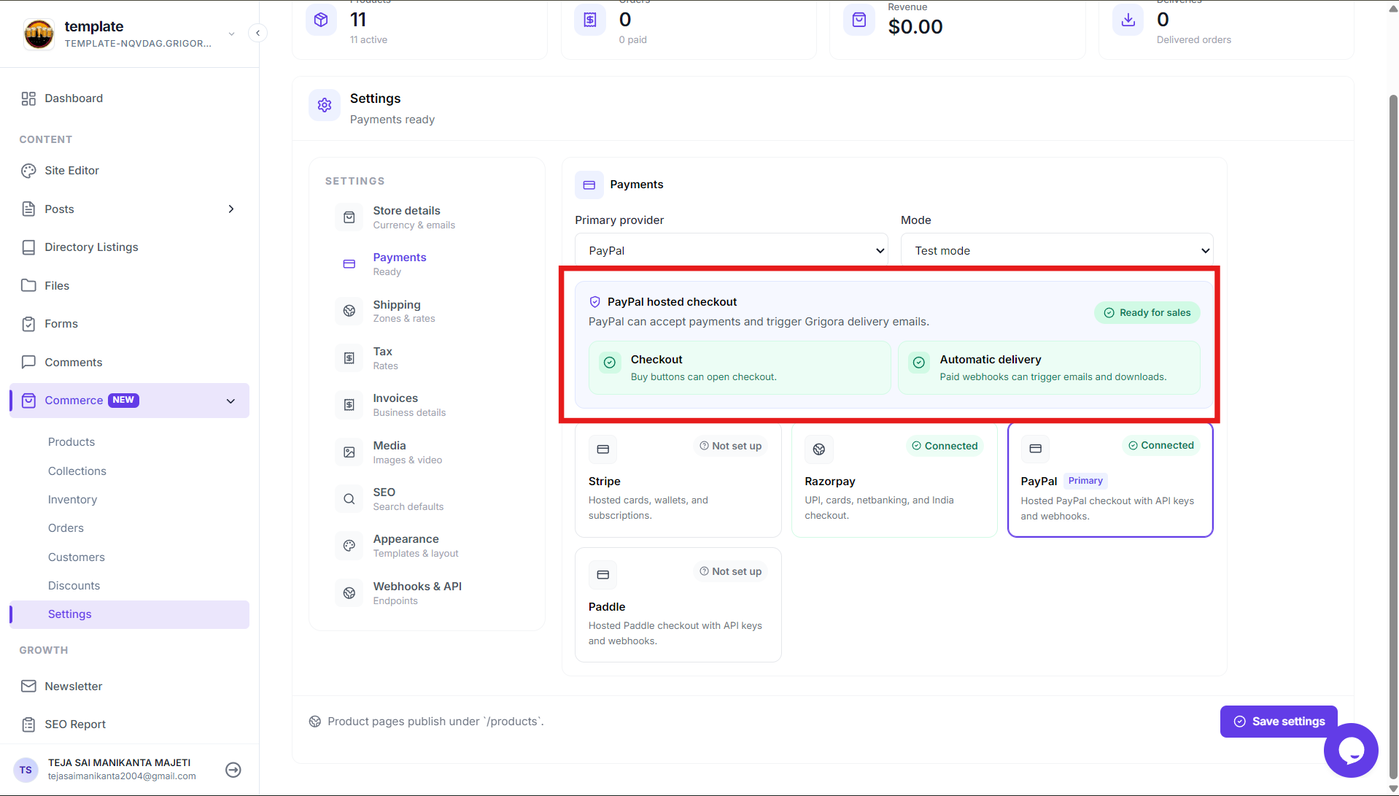
After configuring PayPal, verify that it is selected as the Primary provider on the Payments settings page.
Check that the appropriate Mode, such as Sandbox, is selected before saving the configuration.
Save and Verify the PayPal Configuration
After entering the PayPal credentials and clicking Primary provider in the PayPal configuration modal, the selection is not saved automatically.
On the Payments settings page, verify that PayPal is selected as the Primary provider and that the appropriate mode is selected, such as Sandbox. Then click Save settings to save the payment gateway configuration.
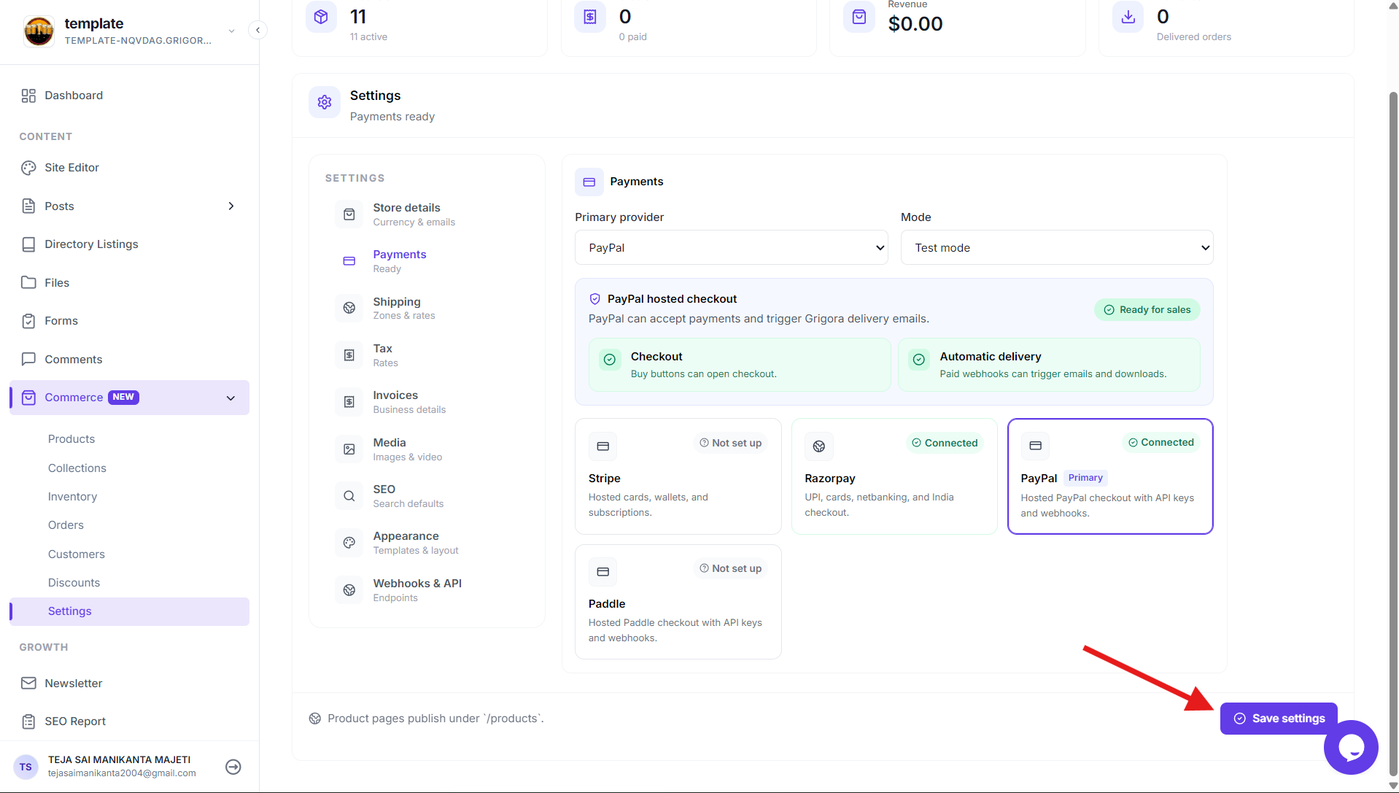
After saving, verify that PayPal is shown as the configured payment provider and that the previous payment setup warning is no longer displayed.
If you configured PayPal using Sandbox credentials, complete a test checkout to verify that the payment flow works correctly before switching to Live credentials. Once testing is successful, replace the Sandbox credentials with the appropriate Live credentials to accept real payments.